
Batch cooking and freezing is one of the best ways to save money and time. A Sunday pot of soup becomes a dozen easy lunches. Done right, frozen meals taste nearly as good as fresh. Here is how.
Food-safety notes on uFreeze follow published USDA and FDA consumer guidance. When in doubt about a food’s safety, throw it out, and follow your appliance manual.
Cool food quickly
Food safety starts before the freezer. The USDA advises refrigerating or freezing cooked food within two hours, or one hour if the room is above 90°F. Large pots of soup cool slowly, which gives bacteria time to grow.
To cool quickly: - Divide food into shallow containers. - Set the pot in an ice-water bath and stir. - Use ice paddles or frozen water bottles.
You can put warm food in the refrigerator. Shallow containers help it cool fast.
Portion before freezing
Freeze in the portions you will use: single servings for lunches, family-size for dinners. Smaller portions also freeze and thaw faster.
Silicone portion trays are perfect for soup, stock, and sauces. Freeze, pop out the blocks, and store them in bags.
Choose the right packaging
- Freezer bags: freeze flat, then stand up like files.
- Vacuum-sealed bags: best protection against freezer burn. Pre-freeze liquids before sealing with an edge sealer.
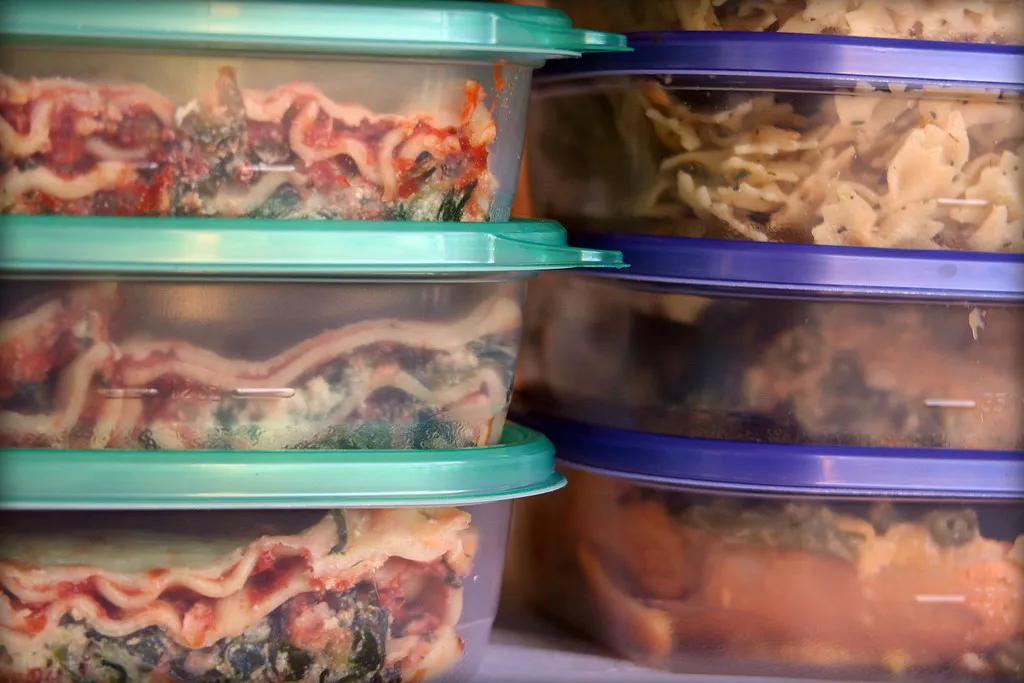
- Rigid containers: good for stews and casseroles. Leave headspace, about half an inch to an inch, for liquids to expand.
- Foil pans with lids: great for casseroles you will bake from frozen.
What freezes well
- Broth-based soups and stews
- Chili and beans
- Tomato sauces and curries
- Casseroles and lasagna
- Cooked grains like rice (cool quickly)
- Meatballs and burgers
- Muffins, bread, and cookie dough
What does not freeze as well
- Cream-based soups can separate. Add cream or milk when reheating.
- Potatoes in soups can turn grainy. Slightly undercook them, or add fresh when reheating.
- Pasta can get mushy. Cook it fresh and add it to thawed soup.
- Fried foods lose crispness.
- Salad greens and raw vegetables with high water content get limp.
Label everything
Write the name, date, and portion size on every container. Add reheating notes if helpful.
How long do frozen meals keep?
The USDA says food kept at 0°F is safe indefinitely, but quality fades. Its storage chart suggests about 2 to 3 months for soups, stews, and casseroles for best quality. See how long food lasts in the freezer.
Thawing and reheating
- Thaw in the refrigerator overnight, or in cold water in a sealed bag, changing the water every 30 minutes.
- Reheat from frozen in a pot over low heat, stirring often, or in the microwave.
- Reheat to 165°F, as the USDA recommends for leftovers. Bring soups and sauces to a rolling boil.
See safe thawing methods.
Build a freezer meal habit
Double your recipe once a week and freeze half. Keep an inventory so you know what is ready. See how to organize a chest freezer.
Freezer meals for others
Frozen meals are a thoughtful gift for new parents or someone recovering from illness. Use disposable containers, label clearly with reheating instructions, and list major allergens.