
Freezers are great at keeping food safe, but frozen food does not stay perfect forever. There is a difference between safety and quality. Knowing both helps you use food at its best and avoid waste.
Food-safety notes on uFreeze follow published USDA and FDA consumer guidance. When in doubt about a food’s safety, throw it out, and follow your appliance manual.
Safety vs quality
The USDA says food stored constantly at 0°F (-18°C) will always be safe. Freezing keeps food safe by slowing the movement of molecules, which puts microbes into a dormant stage. It does not kill most bacteria, but it stops them from growing.
Quality is a different story. Over time, frozen food can lose flavor, texture, color, and moisture, especially if it has freezer burn. That is why storage charts give recommended times for best quality, not safety cutoffs.
Keep your freezer at 0°F
Use a freezer thermometer to confirm your freezer stays at 0°F or colder. Temperature swings shorten quality time.
Typical storage times for best quality
These ranges are based on the USDA’s cold food storage guidance. Times are for quality only, and good packaging matters.
Meat - Steaks, chops, and roasts (beef, pork, lamb): 4 to 12 months - Ground meat: 3 to 4 months - Bacon and sausage: 1 to 2 months - Hot dogs and lunch meats: 1 to 2 months - Ham, fully cooked: 1 to 2 months
Poultry - Whole chicken or turkey: up to 1 year - Poultry pieces: about 9 months - Ground poultry: 3 to 4 months
Seafood (FDA and USDA guidance) - Lean fish like cod and flounder: about 6 to 8 months - Fatty fish like salmon: about 2 to 3 months - Cooked fish: about 4 to 6 months - Shrimp and shellfish: about 3 to 6 months
Cooked foods - Soups and stews: 2 to 3 months - Casseroles: 2 to 3 months - Cooked meat and poultry leftovers: 2 to 6 months - Pizza: 1 to 2 months
Other - Bread: about 3 months - Most vegetables, blanched: 8 to 12 months - Most fruits: 8 to 12 months - Butter: 6 to 9 months
Check the USDA’s FoodKeeper app for more items.
Packaging matters
Food in good packaging keeps quality longer. Vacuum sealing removes air and slows freezer burn, which can extend quality time.
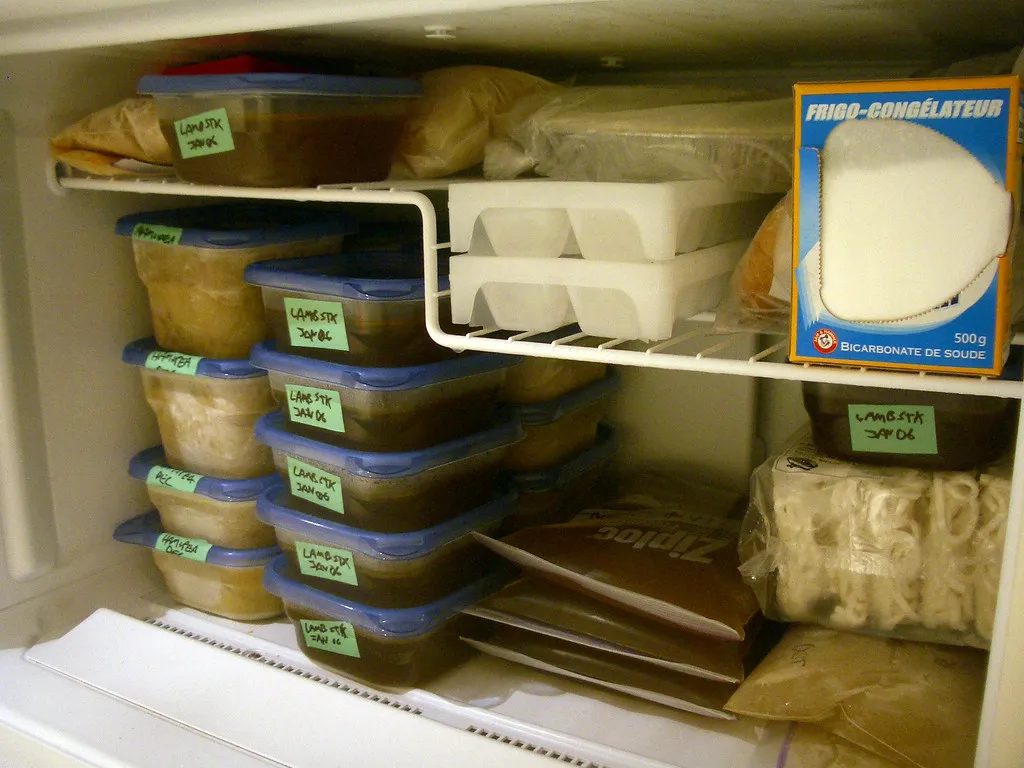
Label and date everything
Write the contents and date on every package. Without a date, you are guessing.
Signs of quality loss
- Grayish or brown dry spots (freezer burn)
- Large ice crystals inside the package
- Off smells after thawing
- Mushy texture in vegetables and fruit
These are quality issues. Trim freezer-burned areas, or use the food in soups and stews.
What about after an outage?
If your freezer lost power, food safety depends on whether the food stayed cold enough. See power outage freezer safety.
Rotate your stock
Use the oldest food first. Keep an inventory list. See how to organize a chest freezer.
When in doubt
If you are unsure whether thawed food is safe because of how it was handled, follow the USDA’s advice: when in doubt, throw it out.