
Portable fridge-freezers, often called compressor coolers or 12V fridges, keep food cold, or even frozen, without ice. They are popular with campers, overlanders, RVers, and road trippers. They are pricey, but for long trips they can be a big upgrade over an ice chest.
Food-safety notes on uFreeze follow published USDA and FDA consumer guidance. When in doubt about a food’s safety, throw it out, and follow your appliance manual.
How they work
These coolers use a small compressor, like a mini refrigerator, to chill the compartment. They plug into a vehicle’s 12V outlet, a wall outlet with an adapter, or a portable power station. Many let you set an exact temperature, from freezer temperatures to refrigerator temperatures.
Compressor vs thermoelectric
- Compressor coolers can reach freezer temperatures and work well even in hot weather. They are efficient.
- Thermoelectric coolers are cheaper and lighter, but they can usually cool only a certain number of degrees below the outside temperature, and they cannot freeze. They use more power for the cooling they provide.
Benefits over ice chests
- No ice to buy or drain.
- No soggy food.
- Precise temperature control, including freezing.
- More usable space, since ice takes room.
- Better food safety on long trips.
Downsides
- Cost. They often cost several hundred dollars or more.
- Power needs. You need a reliable power source.
- Weight. Heavier than an ice chest when empty.
- Noise. The compressor hums.
What to look for
- Capacity. Measured in quarts or liters. Consider how many people and days you will feed.
- Single or dual zone. Dual-zone models let you run a fridge and freezer side at different temperatures.
- Temperature range. Make sure it reaches freezer temperatures if you need them.
- Power options. 12V DC, AC adapter, and sometimes solar input.
- Battery protection. Low-voltage cutoff prevents draining your car battery.
- App control. Some models let you monitor the temperature from your phone.
- Build quality. Sturdy handles, tie-down points, and a strong lid.
Powering on the road
- While driving: the vehicle’s 12V outlet.
- At camp: a portable power station, a dual-battery setup, or solar panels.
- At home: an AC adapter.
Check the cooler’s power draw and your battery capacity. Pre-cool the cooler at home before loading food.
Food safety
Keep refrigerated food at 40°F or below and frozen food at 0°F. A separate thermometer is a good backup check.
Overflow storage at home
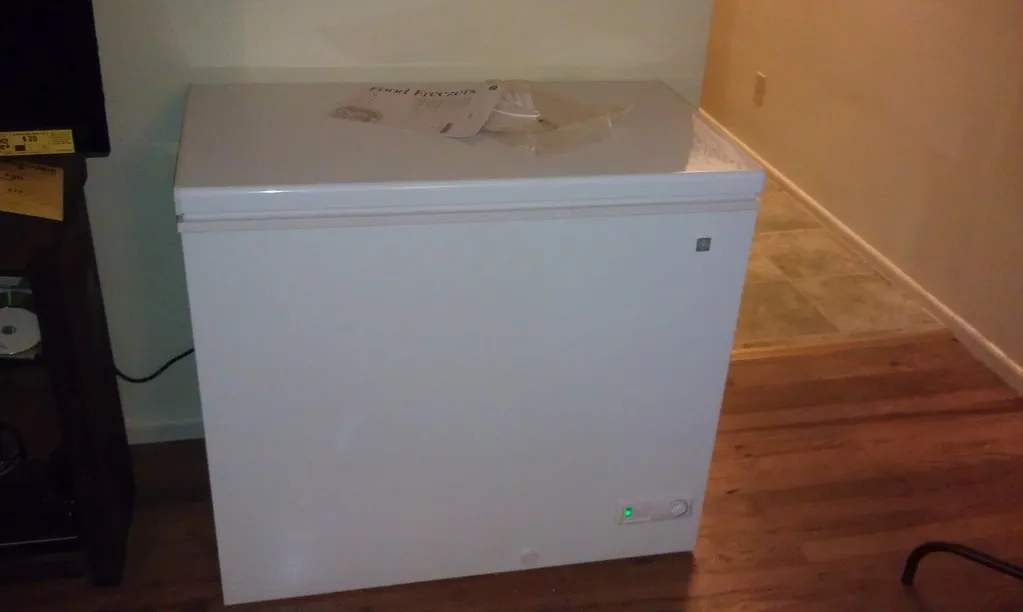
Portable fridge-freezers can also serve as extra fridge or freezer space during holidays or parties. For bigger long-term storage, a chest freezer is more cost-effective.
Tips for using one
- Pack it full for efficiency.
- Keep it in the shade with ventilation around the vents.
- Open the lid as little as possible.
- Clean and dry it after each trip.