
Chest freezers are efficient and roomy, but they have one big flaw: food sinks to the bottom and disappears. A little organization turns a frozen jumble into a pantry you actually use.
Food-safety notes on uFreeze follow published USDA and FDA consumer guidance. When in doubt about a food’s safety, throw it out, and follow your appliance manual.
Start with a clean slate
- Empty the freezer into coolers.
- Throw out anything with severe freezer burn, unknown contents, or that you will not eat.
- Defrost if frost is thick. See defrosting a freezer.
- Wipe the inside clean and dry.
Use bins or baskets
Bins are the backbone of chest freezer organization.
- Use sturdy, open-top bins that you can lift out to reach the bottom.
- Sort by category: beef, poultry, pork, seafood, vegetables, fruit, prepared meals, bread, and treats.
- Color-code bins so you can see categories at a glance.
- Use reusable shopping bags as soft bins that are easy to lift.
Leave the hanging basket on top for small, frequently used items.
Freeze flat and stack like files
Freeze soups, sauces, and ground meat flat in bags, then stand them upright like files in a bin once frozen. You can see every label, and they take less space.
Silicone portion trays make neat blocks that stack well.
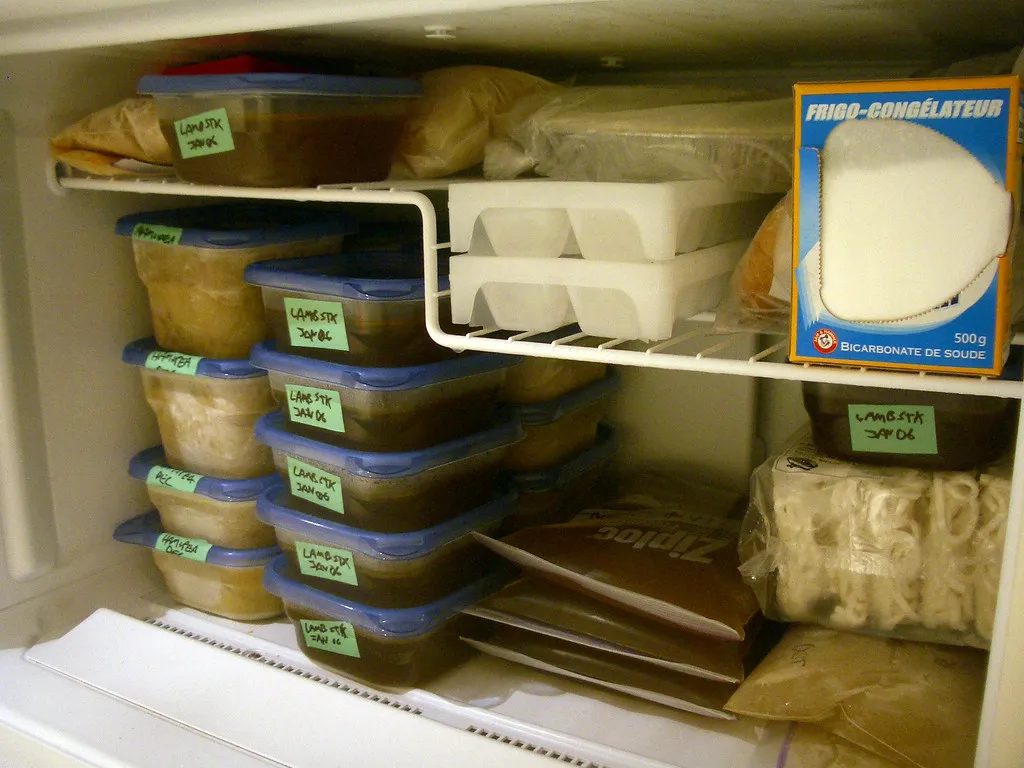
Label everything
Every package should have:
- What it is
- The date frozen
- Quantity or servings
Use freezer tape and a permanent marker, or freezer labels. You will not remember what is in that foil package six months from now.
Keep an inventory
An inventory is the real secret.
- Paper list on the lid. Cross items off as you use them.
- Whiteboard on the wall next to the freezer.
- Phone note or spreadsheet.
Update it each time you add or remove something. Check it before you shop.
First in, first out
Put new items at the bottom or back of each bin and move older items to the top. Use the oldest food first.
Plan meals from the freezer
Once a week, check the inventory and plan meals around what needs using. This keeps food rotating and reduces waste.
Don’t overfill
A full freezer holds temperature well, but you need room for air to circulate near the walls on some models, and you need to see what you have. Leave some space at the top.
Organize by how often you use it
- Top basket: frequently used items like frozen vegetables, butter, and bread.
- Top layer of bins: meals for the coming weeks.
- Bottom layer: long-term storage like bulk meat and garden harvests.
Make the freezer work for you
A chest freezer is a big investment in food savings. An organized system means you eat what you store instead of tossing it. For packaging tips, see freezer burn prevention and vacuum sealers explained. If you are still shopping, read chest vs upright freezer.