
The garage is a natural place for a second freezer. It is out of the way, close to the car, and often has open floor space. But garages get hotter and colder than your kitchen, and many freezers are not built for that. Here is what to know.
Food-safety notes on uFreeze follow published USDA and FDA consumer guidance. When in doubt about a food’s safety, throw it out, and follow your appliance manual.
Why temperature swings matter
Most freezers are designed for indoor rooms with a stable temperature. Their thermostats and compressors expect an ambient range set by the maker, often listed in the manual.
- In a hot garage, the compressor runs longer and harder to keep food frozen. That raises energy use and can shorten the freezer’s life.
- In a cold garage, some freezers, especially combination fridge-freezers, can stop running because the thermostat senses cold air and thinks the job is done. Food in the freezer section can then thaw.
What “garage-ready” means
Garage-ready freezers are designed to keep working in a wider ambient temperature range, such as from near freezing to over 100°F. The exact range varies, so check the spec sheet. These models often use different thermostats, insulation, or compressors.
Chest freezers in garages
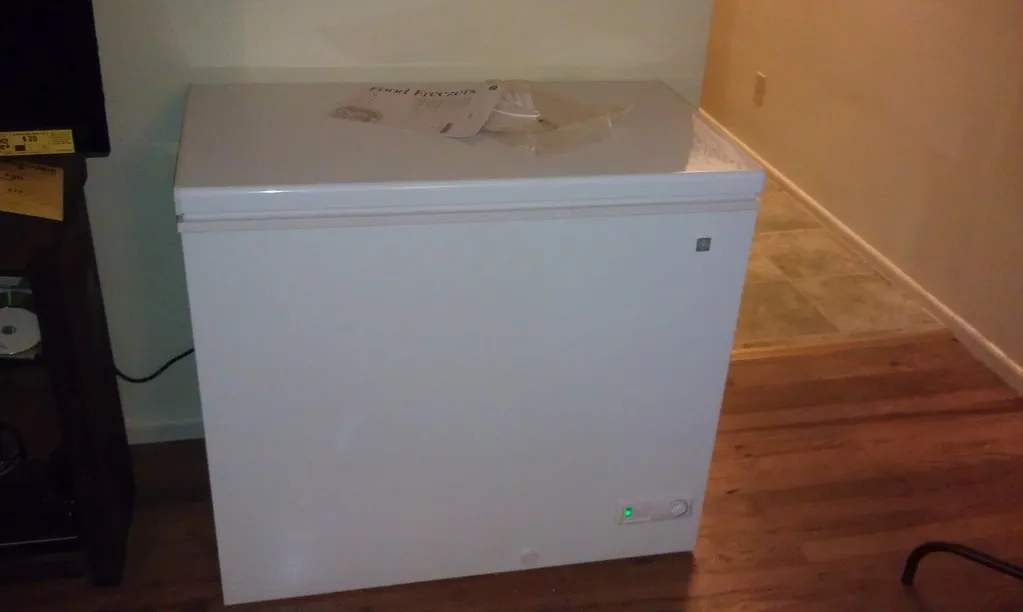
Standalone chest freezers often handle garage conditions better than fridge-freezer combos, because their thermostat measures the freezer compartment directly. Even so, check the maker’s stated range.
Setting up a garage freezer
- Check the manual for the ambient temperature range and clearance requirements.
- Level the unit on a solid floor. Use a mat or a pair of boards if the floor slopes toward the door.
- Leave space around the sides and back for airflow, as the maker recommends.
- Keep it out of direct sun and away from the water heater or furnace.
- Plug directly into a grounded outlet. Avoid extension cords unless the maker allows a heavy-duty one. GFCI outlets are required in many garages by building codes; some older freezers trip them. Talk to an electrician if you have problems.
- Let it cool before loading. Many makers suggest running a new freezer empty for several hours.
Monitor the temperature
A freezer thermometer, or a wireless sensor that alerts your phone, helps you confirm the freezer stays at 0°F or below, especially during heat waves or cold snaps.
Pests and dust
Garages can be dusty and attract pests. Vacuum the condenser coils, if accessible, once or twice a year. Keep the area around the freezer clean and free of food spills.
Security and safety
- Some families lock chest freezers to keep children out. Never let kids play in or around a freezer. Old, unused freezers should have their lids removed or be properly disposed of.
- Keep the freezer away from chemicals, paints, and fuels.
Outages
Garage freezers are easy to forget during outages. Keep the lid closed and know how long food will stay frozen. See power outage freezer safety.
Energy tips
- Keep the freezer fairly full. Frozen food helps hold the temperature. Fill gaps with jugs of water if needed.
- Check the lid or door gasket for a tight seal.
- Defrost manual units when frost builds up. See defrosting a freezer.
Should you put a freezer in the garage?
If your garage stays within the maker’s range, or you choose a garage-ready model, it can be a great spot. If your garage gets extremely hot or cold, a basement or utility room may be better. For choosing the freezer itself, see chest vs upright freezer.